Beyond Pressure: Why Hydrostatic Testing on Cylinders Cannot Wait
Ensuring the integrity of high-pressure cylinders (CO₂, SCBA, and EEBD) goes far beyond complying with legal requirements from IMO, SOLAS, NORMAM, and INMETRO—it's a matter of saving lives and protecting your assets.
Beyond Pressure: Why Hydrostatic Testing on Cylinders Cannot Wait
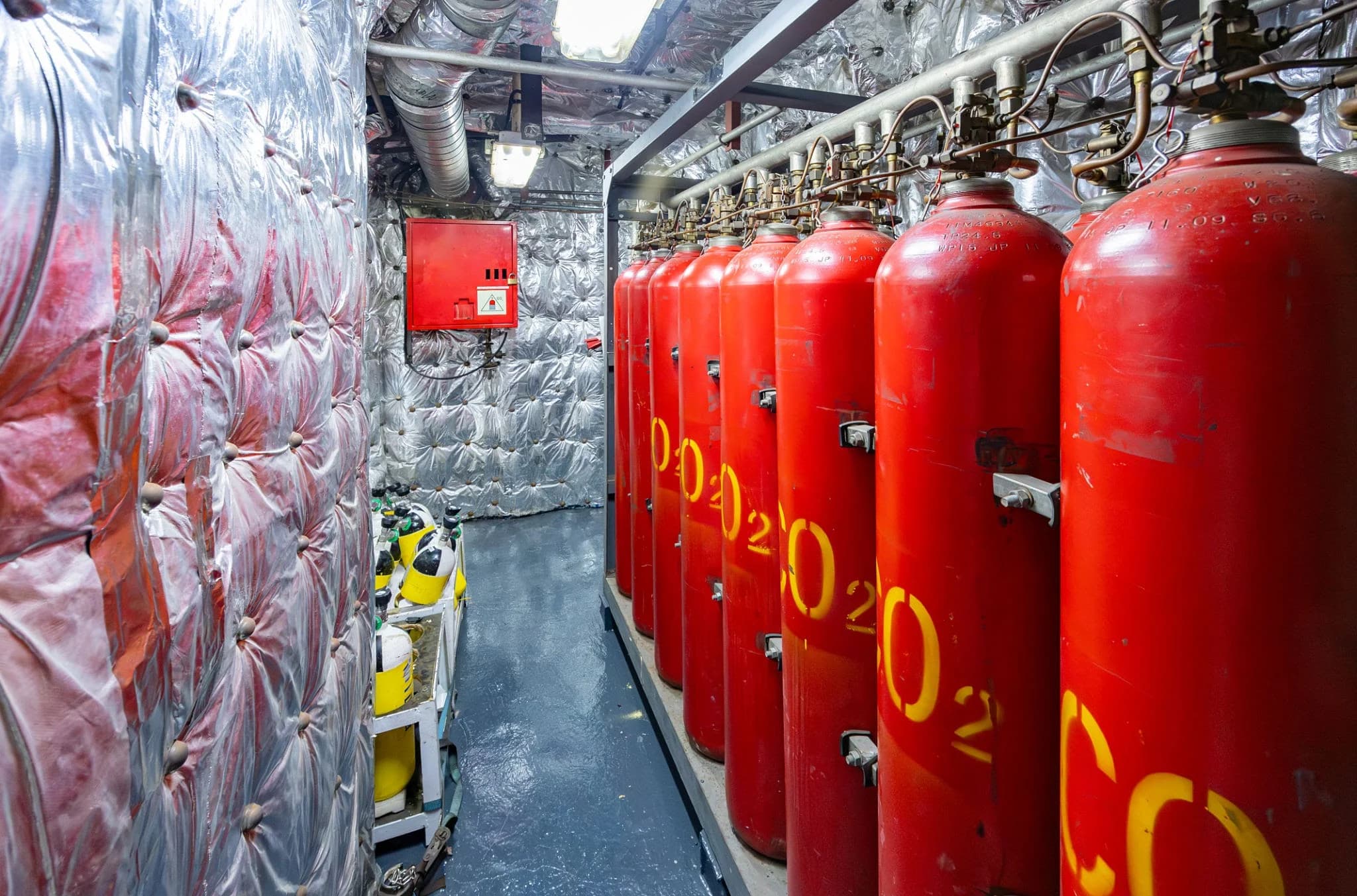
Imagine a piece of equipment holding a pressure of up to 300 bar right next to your chest or protecting the engine room of your vessel. High-pressure cylinders (whether CO₂, SCBA self-contained breathing apparatus, or EEBD emergency escape breathing devices) are true safety shields—but to work when you need them most, they require invisible monitoring.
That is where the Hydrostatic Test (or Hydrotest) comes in. Far more than just a rigid legal requirement, it is the only guarantee that the steel, aluminum, or composite material of the cylinder can still withstand the internal force it is subjected to.
Below, we explain directly what you need to know to keep your equipment strictly up to date and within the law.
What is Hydrostatic Testing and How Does It Work? (Testing Methods)
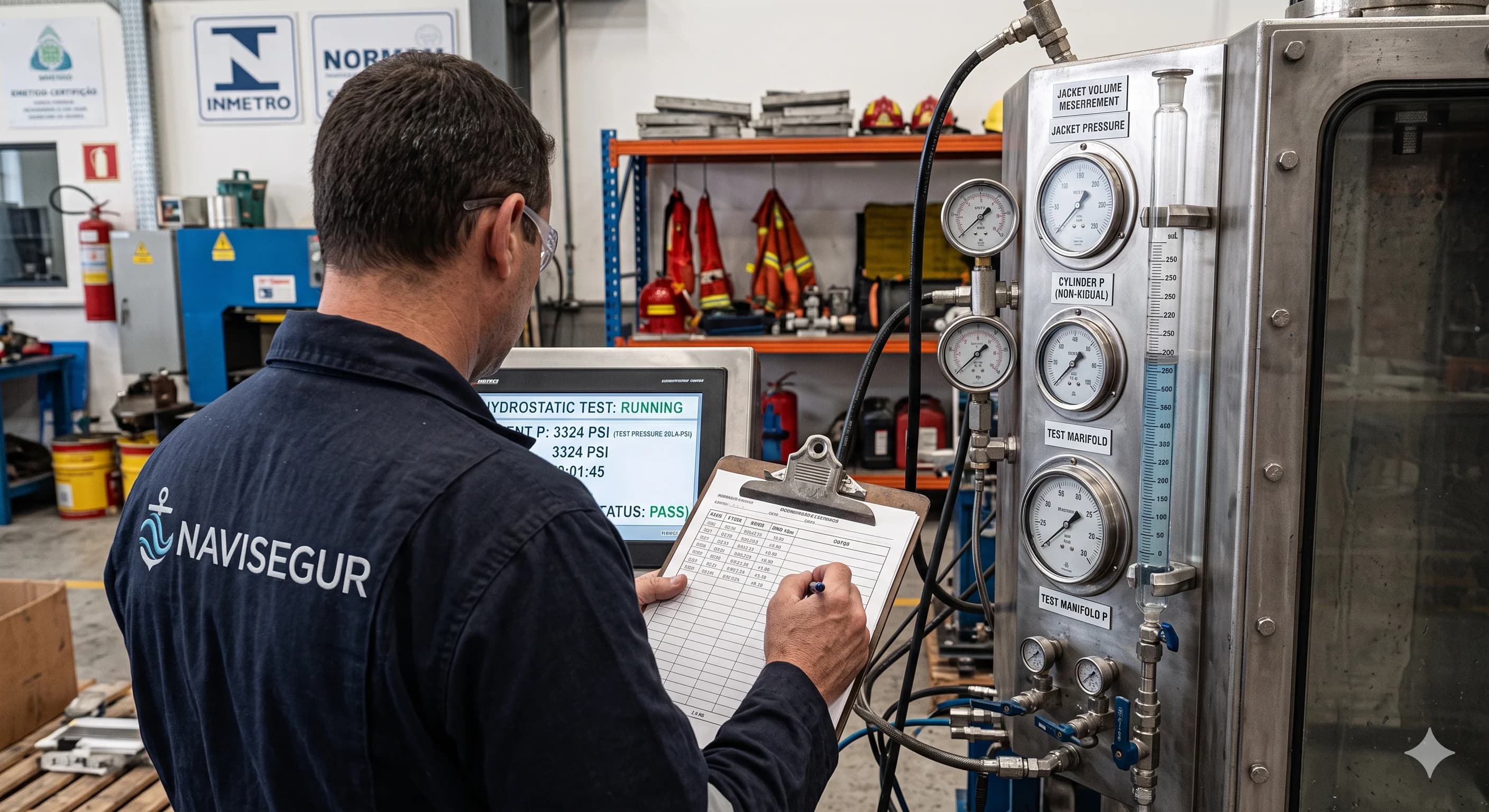
The hydrostatic test assesses the physical integrity of the cylinder using water. The most reliable and globally used method is the Water Jacket Method. The process works as follows:
- The cylinder is emptied, visually inspected inside and out, and completely filled with water.
- It is placed inside a sealed chamber (also filled with water).
- An internal test pressure—which is typically 1.5 times greater than the cylinder's normal working pressure—is applied.
- The testing equipment measures the cylinder's "total volumetric expansion" under pressure and its "permanent expansion" after the pressure is released. If the cylinder stretches beyond the limit allowed by the standards, it is condemned and immediately removed from circulation due to material fatigue.
How Often Should It Be Done? (Validity Period)
The national and international golden rule for the vast majority of high-pressure steel and aluminum cylinders is clear:
- Frequency: The hydrostatic test must be performed every 5 years. This five-year window is the standard required by the main regulatory frameworks:
- International: International Maritime Organization (IMO) and the SOLAS Convention (focused on the safety of life at sea).
- National and Maritime: NORMAM (Brazilian Maritime Authority / DPC), INMETRO regulations, and ABNT technical standards (such as NBR 12274 and NBR 13243).
“In highly corrosive environments, such as the maritime and offshore sectors, visual inspections must be conducted annually, but the hydrostatic test remains mandatory at the 5-year ceiling (or sooner, if the cylinder suffers any severe physical impact or heat damage).”
What Must Be Marked on the Cylinder After the Test? (Post-Test Features)
An approved cylinder needs to "speak" to show it is safe. After passing the hydrotest at an authorized station, the equipment must feature mandatory markings that prove its compliance to inspectors, Classification Societies, and audits:
- Stamping on the Shoulder (Cylinder Neck): For steel or aluminum cylinders, data is permanently punched into the metal. It must include the trademark/logo of the company that performed the test, as well as the month and year of the current test (e.g., 06/26).
- Identification Label or Ring: On certain types of fire extinguishers and composite cylinders, tamper-evident seals or plastic rings are used to indicate the maintenance year and batch.
- Hydrostatic Test Certificate: A cylinder never travels alone. It must be accompanied by an official technical report issued by the accredited company, detailing the applied pressure values, the measured expansion, and the signature of the technical professional in charge.
Why the Right Date Matters
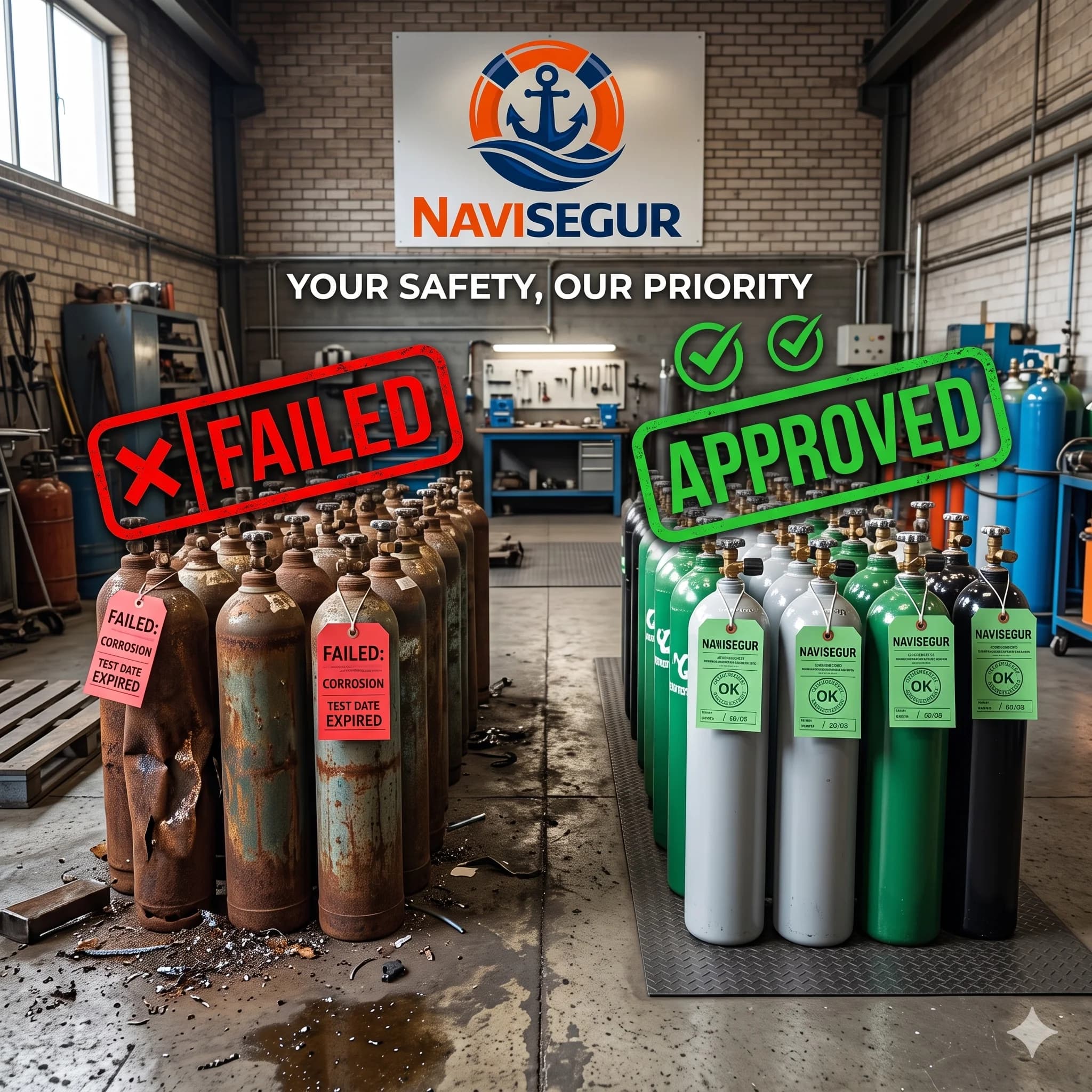
Allowing the test to expire means taking two massive risks:
- Human Risk: A cylinder weakened by internal corrosion can fail tragically during refilling or, worse, fail when supplying breathable air to a crew member or firefighter.
- Commercial and Legal Risk: Vessels and facilities with expired cylinders are subject to heavy fines from the Maritime Authority, detention in ports due to non-compliance with SOLAS/NORMAM, and, in the event of an accident, the loss of insurance coverage.
How We Can Help You
Performing a hydrostatic test requires certified infrastructure, rigorous calibration, and deep knowledge of IMO, INMETRO, and Classification Society requirements. And that is exactly our specialty. Our team features modern test benches and qualified technicians to inspect, test, and certify your CO₂, SCBA, and EEBD cylinders. We ensure your equipment returns to operation not only safe, but with all documentation perfectly aligned for any audit or flag state inspection. Don't play games with pressure. Keep an eye on the shoulder of your cylinders, and if the date is getting close, contact us to schedule your inspection!
Does your vessel need to be 100% compliant?
Request a no-obligation proposal. Our technical team will return within 24 business hours.
Request Proposal